BlogStrategija
Why Crolingo has 24 interface languages
Mayntech16 April 20262 min read
Wafa was looking for salt in a shop in Split. She bought sugar. She knew English. The problem wasn't that she didn't know Croatian — the problem was that English didn't help.
English as a middleman doesn't work
Of the 150,000+ foreign workers currently in Croatia, most come from Bangladesh, Nepal, India, the Philippines, Pakistan, Tunisia, Egypt. Their native languages are Bengali, Hindi, Urdu, Arabic, Tagalog, Nepali.
English isn't a working language for these people. It's not the language they think in. It's not the language in which they understand grammar explanations or navigate through an app.
When Mehmet from Bangladesh opens a Croatian learning app and sees "Choose your learning path", he has to decode English first, then try to understand Croatian. Two languages at once. Makes no sense.
Native language from the first click
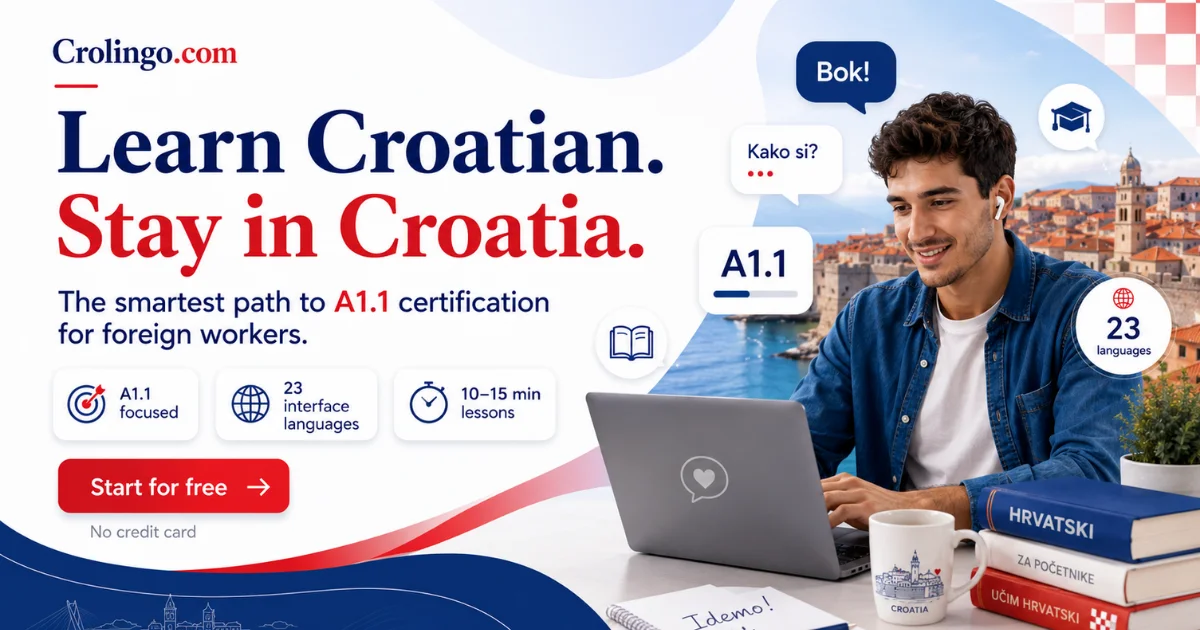
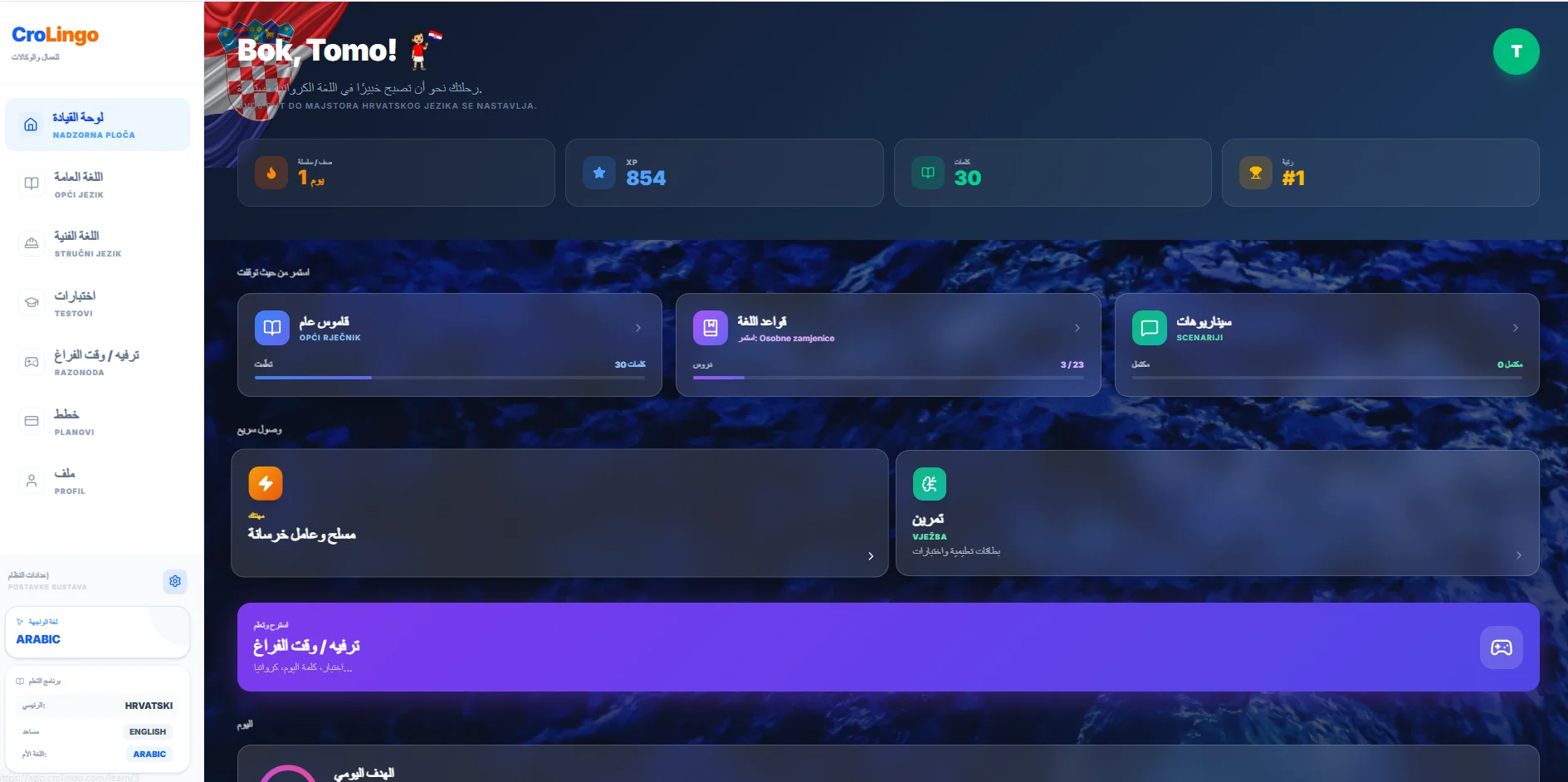
Crolingo has 24 interface languages. The entire app — navigation, explanations, instructions, feedback — is available in Bengali, Hindi, Urdu, Arabic, Tagalog, and 19 other languages.
That means Mehmet opens the app and sees Bengali. He chooses his sector — construction — and sees Bengali. He learns phrases from scenarios and reads explanations in Bengali.
Croatian is the only foreign language he needs. Everything else is in a language he understands.
This isn't a luxury
Native language isn't a feature. It's not nice-to-have. It's the foundation of functional communication.
If you want your workers to pass the A1.1 exam and stay in Croatia, they need to understand what they're learning. A worker can't learn Croatian through English they barely know.
24 languages isn't marketing. It's the minimum for working with people who actually need to learn Croatian.
Need help with a project?
Talk to us — directly, no sales pitch.