BlogTim & kultura
How Crolingo Started — From a Family Problem to a National Solution
Mayntech28 October 20253 min read

Wafa is standing in the aisle between the spice shelf and the checkout at a shop in Zvončac. She speaks Arabic, French, and English. She needed salt. She pointed at six different boxes, because they all look alike. The shop assistant smiled, picked one off the shelf, and said something that sounded like 'so'. Wafa nodded. She bought sugar.
It wasn't an isolated incident. The doctor. The post office. Basic work vocabulary. Everyday situations where you can't Google something before you have to react. Wafa is a member of the Mayntech family. She came to Croatia two years ago. Language was the barrier between functioning and frustration.
She tried Duolingo. She learned the sentence 'The apple is red' and 'The boy drinks water'. That didn't help in the shop. She tried a language school course. Twenty people in a class, different levels, academic approach. It took six months to get to the lesson on grocery shopping. She didn't have six months.
A Product Studio That Doesn't Build for Itself
Mayntech is a product studio. We build software for other companies. Web apps, mobile apps, integrations. That's our business. We'd never built a product for ourselves because we never saw the point — our clients have business problems, we solve them, everyone's happy.
Then we sat down in the kitchen. Wafa was talking again about how hard things were. And someone said what they should have said six months earlier: 'We know how to build an app. Why don't we build something for her?'
It wasn't a business decision. It was a family one. But we know how to build software, and we know what doesn't work in the existing solutions. Duolingo teaches kids and tourists. Formal courses assume you have the time and motivation for grammar. An adult who needs functional language for life and work has neither.
The Prototype and the First Expansion
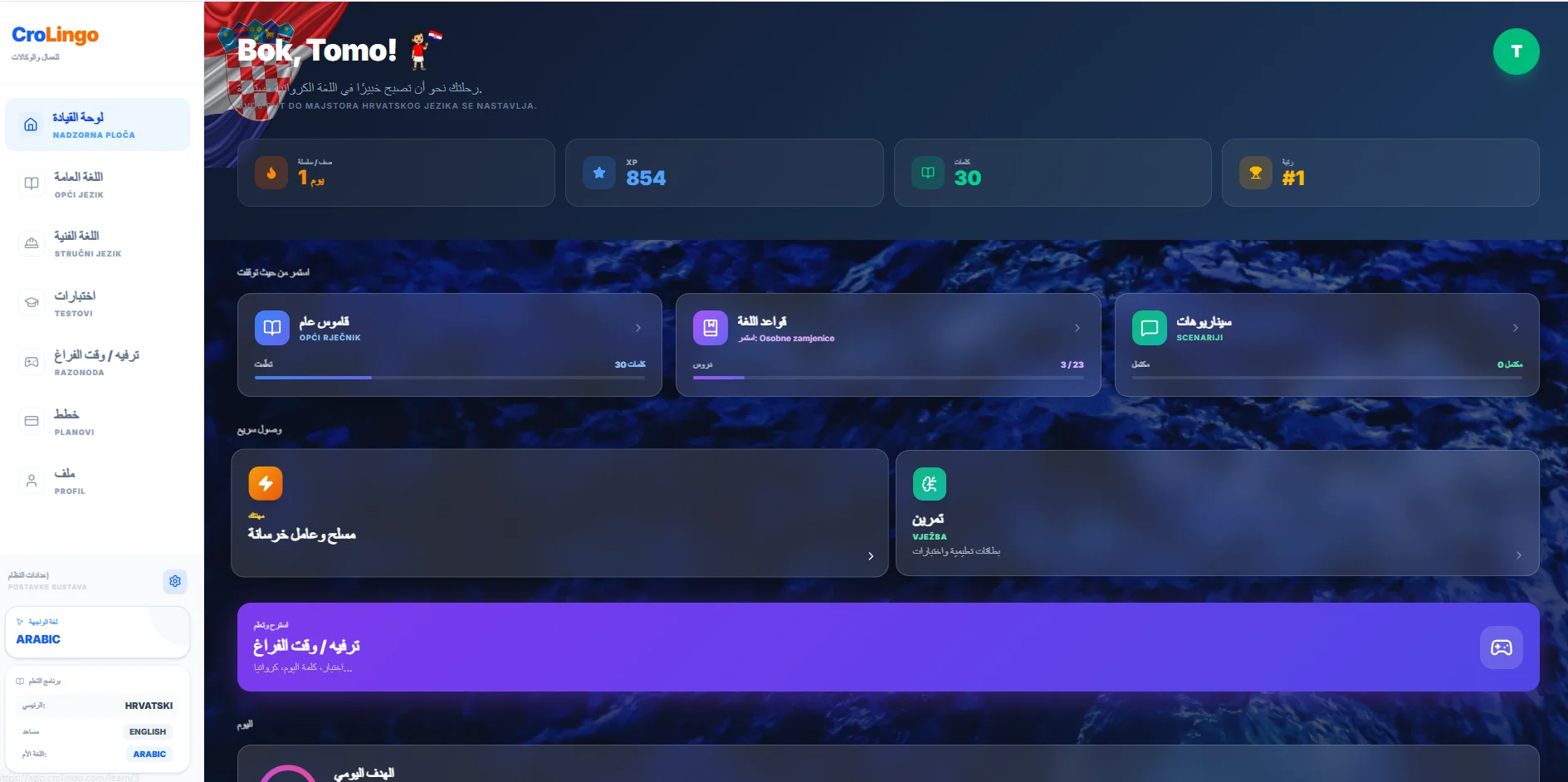
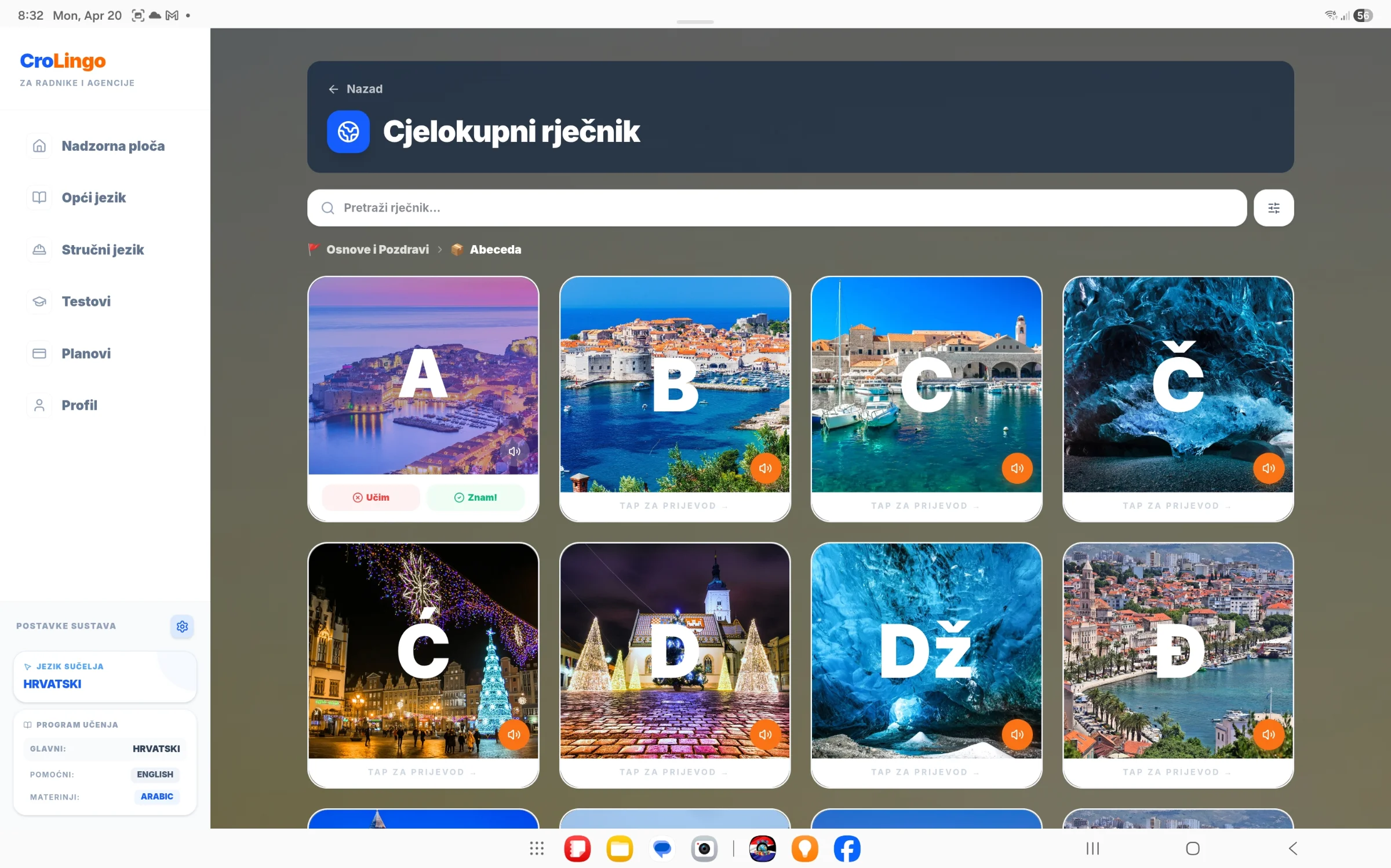
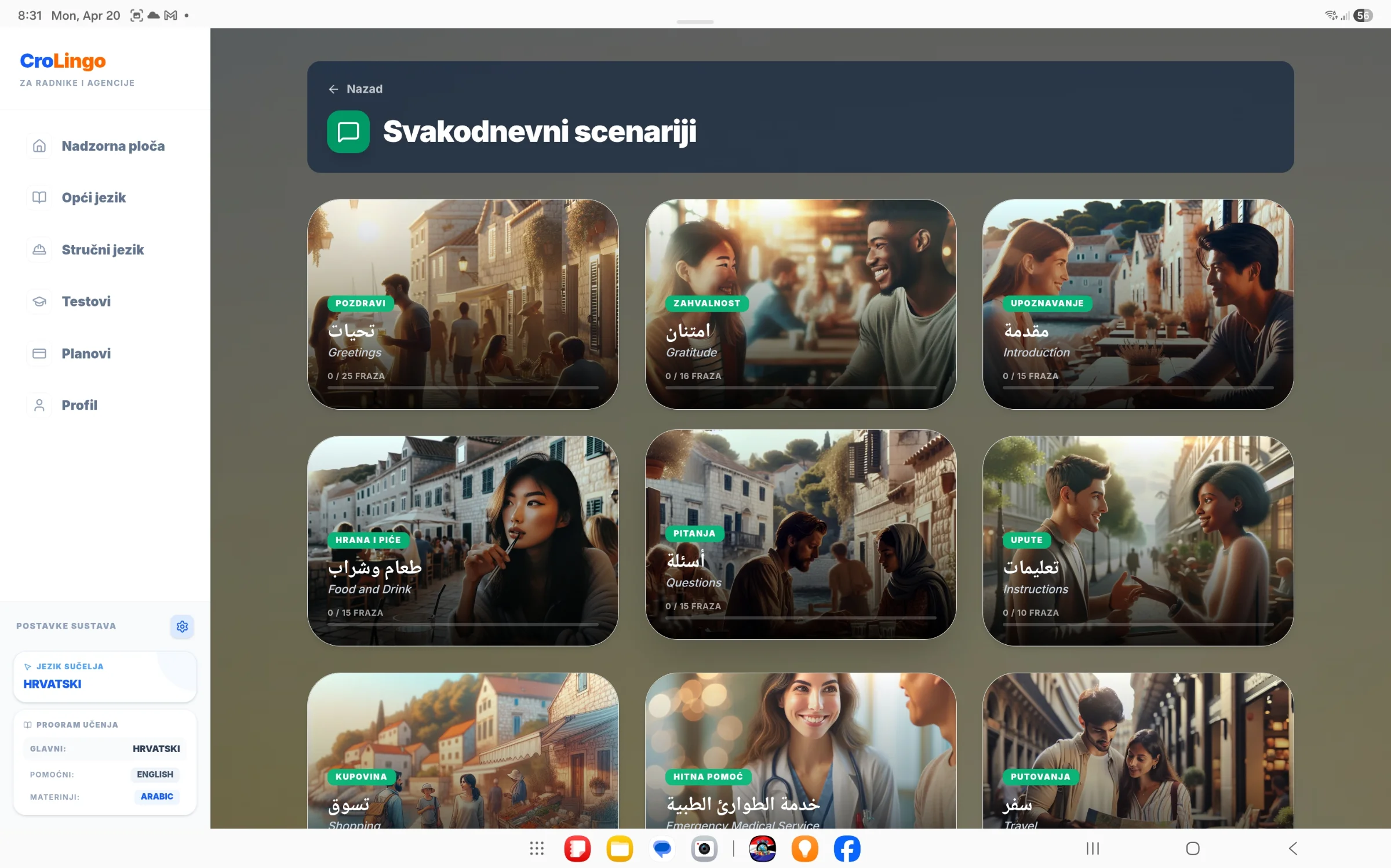
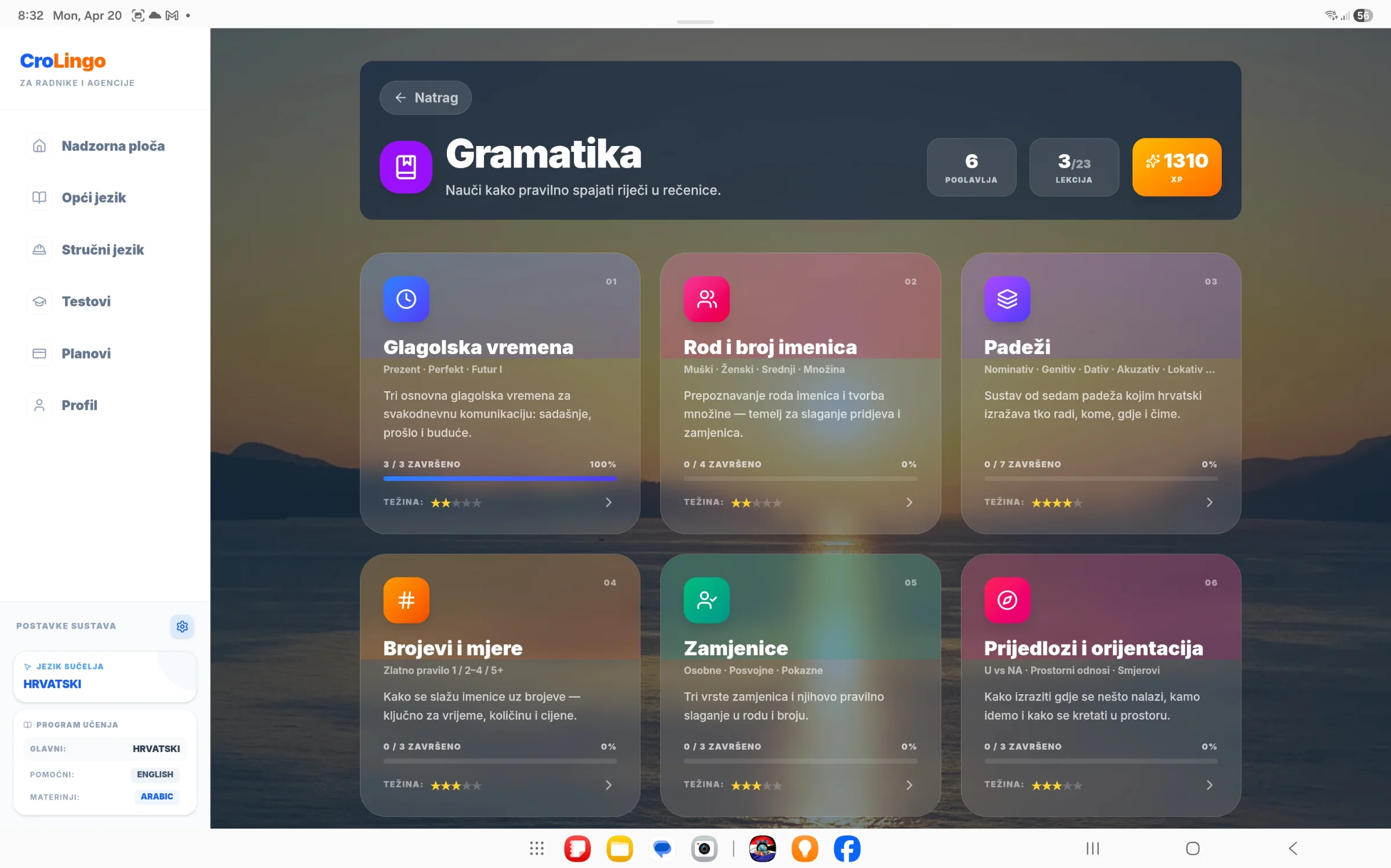
The first prototype was simple. Five lessons. The shop, the doctor, work, paperwork, basic conversation. Minimal design. Clear logic — context before grammar, usage before rules. Wafa uses it. It works.
Then her friends ask if they can try it. One works in a restaurant, one in a hotel, one at an IT company. All foreign women, all English speakers, all with the same problem. We give them the prototype. They use it. Each one asks for something specific to her context.
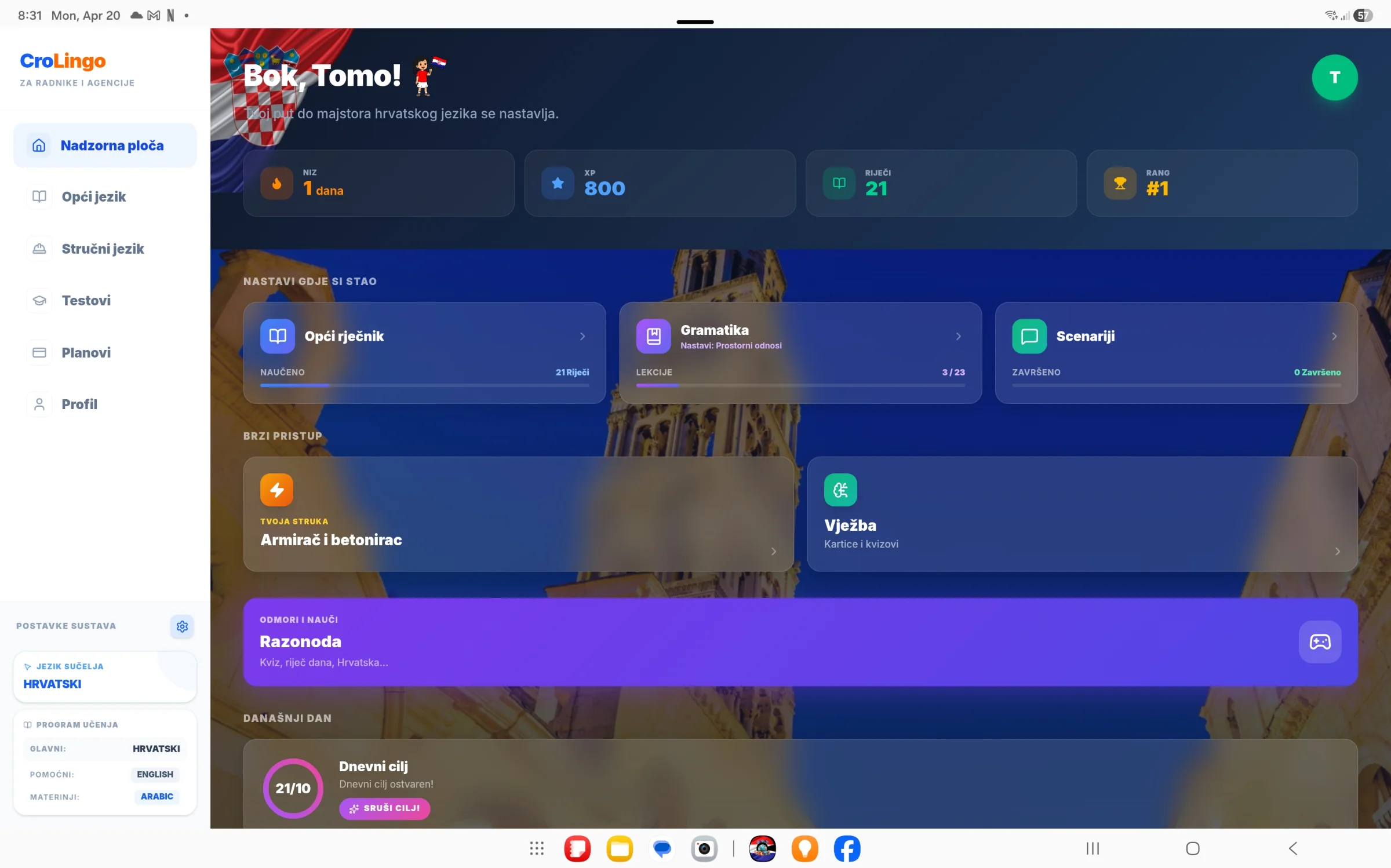
And that's when we start to realize — this isn't just about Wafa. Croatia has 150,000+ foreign workers right now, plus 100,000 more arriving each year. People who came to work, not to visit. People who need functional language to get by and get ahead, not academic Croatian. And the Croatian Foreigners Act (Zakon o strancima, NN 133/20) requires an A1.1 HEP level for temporary residence renewal.
From Family to National
The problem we were solving for Wafa wasn't just hers. It was the problem of hundreds of thousands of people. And the existing solutions weren't built for that problem. We are a product studio — we know how to build software. Now we had a reason to build software for ourselves.
Crolingo didn't come from a business analysis or market research. It came from the concrete frustration of a real person in a real shop in Split. From the fact that we had the skill and the reason to solve that problem. And from realizing that far more people share that problem than we ever imagined.
Today Wafa buys salt without any trouble. She talks to her doctor. She knows the difference between sugar and salt. It's a small win. But for her — and for everyone else Crolingo is built for — it's the difference between feeling like a stranger and feeling like you belong.
This is just the first post about how we built Crolingo. Next, we talk about the three principles that guided us from a family prototype to an app for thousands of people — and why we said no to gamification, AI tutors, and everything else 'everyone else is doing'.
Need help with a project?
Talk to us — directly, no sales pitch.